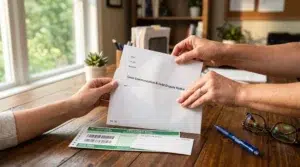
Before deciding how to respond to a debt collector, it helps to understand two separate rights federal law gives you. Under the Fair Debt Collection Practices Act (FDCPA), you generally have the right to dispute a debt in writing within 30 days of receiving the collector’s validation notice, which requires the collector to pause collection until it verifies the debt. Separately, you can send a written request that all further contact stop. That request limits calls, but it does not eliminate the debt or prevent a lawsuit to collect it.
If you are asking how do I stop a debt collector from calling me, the answer is to use these rights in writing, with proof of delivery. That is generally more protective than phone calls. If a collector ignores a valid request, you may have legal options, and a South Carolina consumer protection attorney can help.
Before You Do Anything Else, Know Your Right to Dispute and Verify the Debt
Under 15 U.S.C. § 1692g(a), within five days after first contacting you about a debt, a collector generally must send you a written notice (unless that information was in the first communication or you have paid the debt). The notice must include:
- The amount of the debt;
- The name of the creditor the debt is owed to;
- A statement that unless you dispute the debt, or any part of it, within 30 days after receiving the notice, the collector will assume it is valid;
- A statement that if you dispute in writing within that 30-day period, the collector will obtain verification of the debt (or a copy of a judgment) and mail it to you; and
- A statement that, on your written request within 30 days, the collector will give you the name and address of the original creditor, if different.
Why it matters: under § 1692g(b), if you dispute in writing within the 30 days, the collector must stop collecting the debt, or the disputed part, until it mails you verification. The CFPB’s Regulation F (12 C.F.R. § 1006.34) allows a collector to assume you received the notice five business days after sending it, so act promptly and keep the envelope.
A debt validation letter is a reasonable first step because debts are sometimes wrong. The amount may be inflated, the debt may have been paid, it may belong to someone else, or it may be too old to sue on. Disputing does not mean you do not owe the debt, but it makes the collector show its work. Missing the 30-day window does not count as admitting you owe it (§ 1692g(c)), though you lose the automatic pause.
When you dispute a debt by letter, include your name, the account or reference number, a statement that you dispute the debt and request verification, and, if you want it, a request for the original creditor’s name and address.
Should I Talk to a Debt Collector on the Phone?
That is your choice. The law does not require you to discuss a debt over the phone, and nothing in the FDCPA requires you to call back.
Writing has clear advantages. It creates a record, it is how you trigger your validation and cease-communication rights, and it reduces the chance of saying something you did not intend. What you say can matter, especially with older debts. In South Carolina, an acknowledgment or promise to pay generally does not restart the limitations period on a contract debt unless it is in a writing signed by you (S.C. Code § 15-3-120). Even so, be careful about signing anything or agreeing to a payment plan on an old debt before you understand its effect.
How Do I Send a Cease-Communication Letter?
Under 15 U.S.C. § 1692c(c), if you notify a debt collector in writing that you refuse to pay the debt or that you want it to stop communicating with you, it generally must stop contacting you about that debt. Here is how to stop debt collector calls this way:
- Write a short letter: Include your full name, the collector’s name, the account or reference number if you have it, the date, and a clear statement that you are asking the collector to cease all further communication with you about the debt under the Fair Debt Collection Practices Act.
- Send it to the collector’s mailing address: Use the address on the validation notice or other letters, not the original creditor’s, unless you are writing to both.
- Use a trackable method: The statute does not require a specific mailing method, but certified mail with return receipt is commonly recommended. If your request is mailed, the law treats it as complete when the collector receives it, so proof of the receipt date matters.
- Keep a copy: Save the letter, mailing receipt, and return receipt together.
No special legal wording is required. If you also want to dispute the debt, consider sending the validation dispute first, or making both requests clearly in the same letter.
Note: If you are asking how do I stop a debt collector from calling me, following these step-by-step instructions to send a written cease-communication letter and dispute validation notice is your most effective legal tool under the FDCPA.
What Happens After I Send the Letter?
Once the collector receives a cease communication letter, it generally may contact you only to:
- Tell you it is ending its collection efforts;
- Notify you that it or the creditor may use specified remedies it ordinarily uses; or
- Notify you that it or the creditor intends to use a specified remedy, such as a lawsuit.
That third exception is important. A cease communication letter stops calls and letters; it does not stop a debt collector or creditor from suing you. If you are served with a lawsuit, read the papers carefully and respond by the deadline, or you risk a default judgment.
If I Want to Stop a Debt Collector From Calling Me, Will It Affect My Debt?
No. Stopping contact does not eliminate the debt. The FDCPA controls how collectors communicate; it does not cancel what you owe.
Whether a creditor can win a lawsuit is a separate question, controlled in part by the statute of limitations on debt in South Carolina. Under S.C. Code § 15-3-530(1), an action on a contract, obligation, or liability generally must be brought within three years, which covers many consumer debts. Other time limits can apply depending on the type of debt, when the claim accrued, and the facts. This is different from the FDCPA’s 30-day dispute window, which only governs the validation process. Have an attorney review an older debt before you pay or sign anything.
What If I Have a Debt Collection Attorney in South Carolina?
If a collector knows you are represented by an attorney about the debt and has, or can readily get, the attorney’s name and address, it generally must communicate with your attorney instead of you (15 U.S.C. § 1692c(a)(2)). Our FAQ on debt collectors contacting family, friends, and employers explains how representation also affects contact with third parties.
What If the Debt Collector Keeps Calling After I Sent the Letter?
If a debt collector keeps calling after a cease letter, start documenting:
- Date and time of each call, letter, text, or email after the receipt date;
- The number, the company, the person’s name, and what was said;
- Saved voicemails and copies of written messages.
Then consider your options:
- File a complaint with the Consumer Financial Protection Bureau. Companies generally respond within 15 days.
- File a complaint with the South Carolina Department of Consumer Affairs, online or by mail.
- Consider a claim under 15 U.S.C. § 1692k. A collector that violates the FDCPA may be liable for actual damages, additional statutory damages awarded by the court, and court costs and reasonable attorney’s fees in a successful case. Results are not guaranteed, and an FDCPA lawsuit generally must be filed within one year of the violation.
Separate rules limit calling hours, workplace calls, and repeated calls; see when a debt collector is allowed to call you.
How Can a South Carolina Consumer Protection Attorney Help?
A debt collection harassment attorney near me can:
- Review the debt, the validation notice, and the collector’s communications;
- Help you decide whether to dispute, request verification, stop contact, or do more than one;
- Draft or review your letters;
- Take over communication with the collector; and
- Pursue a claim if the collector violated the law.
No attorney can guarantee a particular outcome.
Schedule a Free Consultation with Shelly Leeke Law Firm
If you are trying to figure out how to stop a debt collector from calling me after you sent a cease-communication or dispute letter, our legal team can help hold unlawful collectors accountable. We can take over all communications, evaluate your rights under the FDCPA, and help you pursue statutory damages if a collector violated the law.
Contact us for a free consultation at (843) 604-3273 now to discuss your legal options with Shelly Leeke Law Firm.