

Key Takeaways
- Our South Carolina motorcycle accident lawyers have represented injury victims since 2007 with offices across South Carolina.
- Seek medical attention, gather evidence, and contact a lawyer prior to talking to an insurance adjuster.
- Don’t allow insurance companies to dictate the story. They always have a motive for paying out as little as possible.
- Your initial consultation is free.
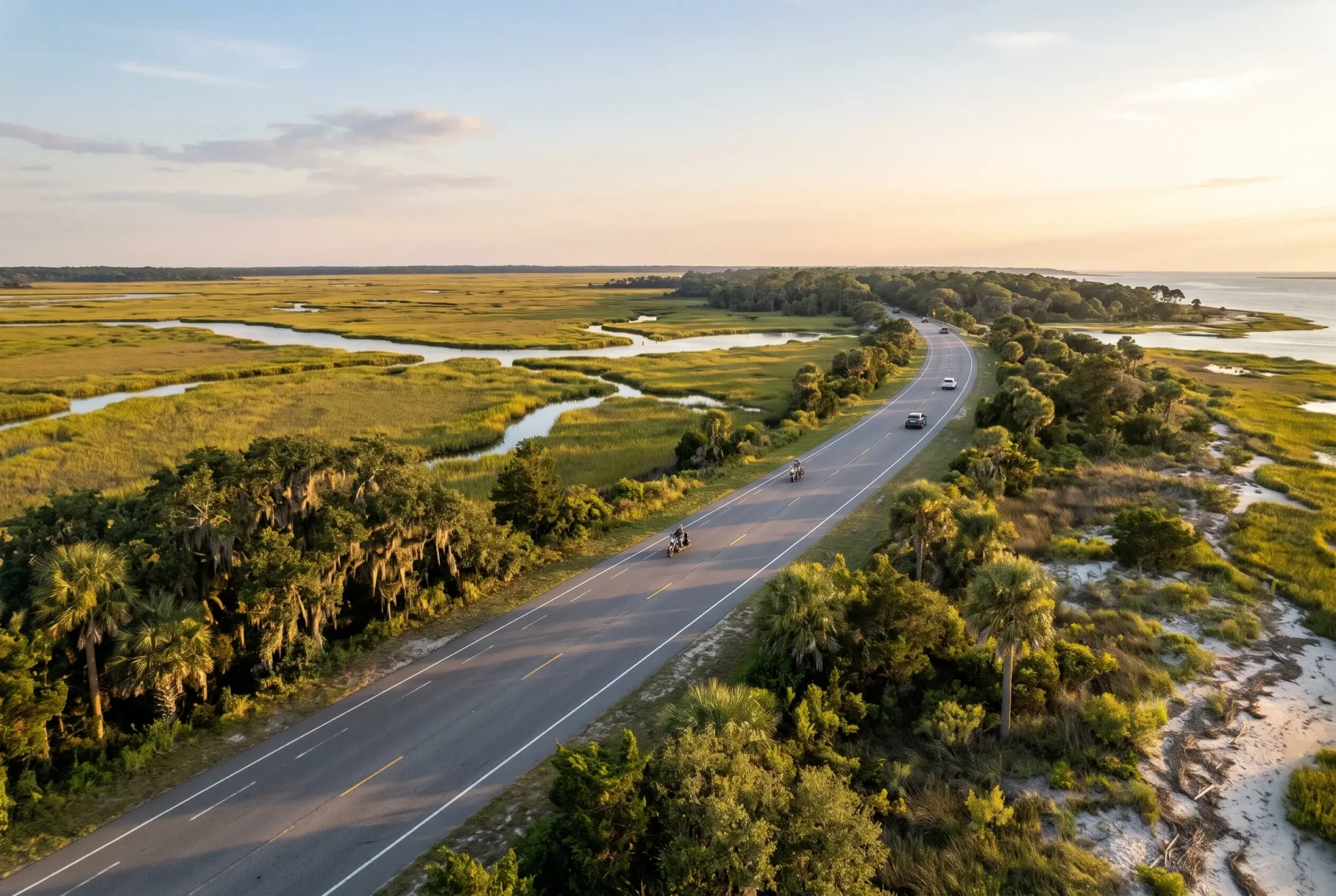
While South Carolina offers incredible riding opportunities, every region brings unique hazards, from tight curves along Highway 11 in the Upstate to distracted beach traffic near US-17 and heavy commuter volume on I-26.
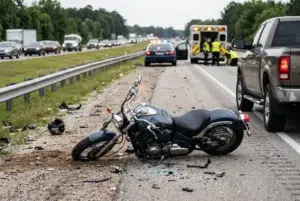
Motorcyclists don’t have any form of crumple zones or airbags in case of a collision. So, while a fender bender means nothing to the average SUV driver, the same collision could lead to road rash, compound fractures, and even brain injuries for the bike rider. While you worry about medical bills and lost income, the insurance adjusters often move quickly to minimize payouts.
Always hire a South Carolina motorcycle accident lawyer who understands your case. At Shelly Leeke Law Firm, we’ve been protecting the rights of injured riders since 2007. offices across South Carolina, we know the local courts and fight to hold negligent drivers accountable.
You don’t need to deal with everything alone. We have offices in North Charleston (our headquarters), Columbia, Greenville, Myrtle Beach, Beaufort, Mt. Pleasant and Walterboro. If you were injured in a motorcycle accident, contact us today.

How Can a South Carolina Motorcycle Accident Lawyer Help You?
A motorcycle claim extends beyond just completing paperwork. Let our lawyers take care of the legal and investigative requirements so that you can concentrate on recuperating. Our process is founded on four elements.
- Independent accident investigation: Instead of depending on the story told by the other motorist or the quick decision of the insurance company, we study the accident report, visit the accident site, and analyze the condition of the road and visibility. It helps us identify all possible parties who could be held liable. These might include the negligent driver, the owner of the motor vehicle, the employer of the driver, or the government agency responsible for the unsafe road.
- Preservation of critical evidence: Evidence quickly vanishes. Skid marks wear off; cars are fixed or resold; surveillance videos are regularly deleted. We move swiftly to issue preservation requests, secure photographs and video, and preserve the physical evidence associated with your crash.
- Shielding you from insurance adjusters: After we begin representing you, the insurance company talks to us, not you. You’re not required to give a recorded statement, speculate about your recovery, or be pushed into signing a release. This is essential, since off-the-cuff statements are frequently twisted around and used against injured riders down the road.
- Calculating full, lifelong damages: A proper claim takes into account what you’ll endure down the line, not just what’s currently on your medical bills. We work with your doctors and, when necessary, other specialists to factor in surgeries in the future, ongoing treatment, diminished earnings capacity, and how your injuries affect your daily life.
What Happens After You Call Us?
Many motorcycle accident victims have never retained a South Carolina motorcycle accident attorney. This is what to expect when you call a South Carolina motorcycle accident law firm like Shelly Leeke Law Firm.
Free, no-obligation case evaluation
You can contact us at any time. We listen to your story and answer your questions, explaining your legal rights. There are no fees and no obligations.
Immediate investigation and evidence gathering
As soon as you decide to retain our services, we get to work. We obtain the accident report, locate witnesses, gather photographic and video evidence, and send preservation letters to the parties with important evidence.
Medical documentation and comprehensive case valuation
Your medical history, your current treatments, and your overall recovery are assessed. The discussions concerning settlement are delayed until it is clear that we have the right prognosis and can figure out the true value of your case.
Aggressive settlement demand and negotiations
When the appropriate time comes, we will demand a settlement based on a solid case and negotiate with the insurance company. We know how the insurance company works, and we prepare every claim as though it may be tried.
Trial preparation and courtroom advocacy
Should the insurance company decide to ignore our settlement demand and not provide you with fair compensation, we are willing to take your case to court. Insurance companies do take notice when an attorney is fully prepared to take a case to trial.
What Causes Most Motorcycle Crashes in South Carolina?
Most motorcycle crashes involve a driver who failed to see the rider or failed to give the rider room. These are the patterns we see most often:
- Left-turning vehicles at intersections: A driver turns left across a rider’s path, often claiming they “never saw” the motorcycle. It is one of the most common causes of serious rider injuries and fatalities.
- Blind-spot lane changes: A motorcycle’s narrow profile makes it easy to miss in a driver’s mirror. A driver merges into an occupied lane, forcing the rider off the road or into another vehicle.
- Speeding and tailgating: Following too closely or driving too fast leaves no time to react, and a motorcycle has far less margin than a car for sudden stops.
- Road debris and hazards: Gravel, sand, spilled cargo, and loose objects are an inconvenience to a car but can send a motorcycle into a skid or a fall.
- Poorly maintained infrastructure: Potholes, uneven pavement, missing signage, worn lane markings, and poorly designed intersections can cause or contribute to a crash. In some cases, a government entity or contractor may be responsible.
Other causes include distracted driving, impaired driving, and failure to yield. If another driver fled the scene, our hit-and-run accident attorneys can explain what options may exist, including uninsured motorist coverage.
How Do Insurers Use the Helmet Question?
In the event that you were involved in a motorcycle accident, do not be surprised by the questions raised by the insurance adjuster concerning your riding equipment. The inquiries that arise regarding the rider’s riding gear are never neutral; they are an attempt to plant an idea that you were responsible for your own injuries, which can lower the value of your claim.
The adjuster creates this bias in order to change the focus of the claim from the driver’s fault to the rider’s. It is implied that if the rider had behaved in a certain way, his injuries would have been less. Therefore, even an offhand response to the adjuster can end up jeopardizing the rider’s settlement.
There is no need for you to deal with these issues by yourself. Once you hire us, we will communicate with the insurance company on your behalf, and our efforts will be focused exactly where they should be: on the behavior of the negligent driver who caused the accident.
What Common Injuries Result from Motorcycle Collisions?
Motorcycle crashes tend to cause severe, life-altering injuries. Some of the most common include:
- Traumatic brain injuries (TBI): Even with protective gear, the force of a collision can cause concussions, contusions, and more serious brain damage. Symptoms can be subtle at first, including memory problems, mood changes, and headaches, and can worsen over time. Learn more about our approach to traumatic brain injury claims.
- Spinal cord damage and paralysis: Damage to the spinal column can cause partial or complete loss of movement and sensation. These injuries often require lifelong care, adaptive equipment, and home modifications. Read more about long-term care options for spinal cord injuries.
- Road rash and severe abrasions: Sliding across pavement can strip skin and tissue, causing deep wounds, infection, nerve damage, and permanent scarring that may need skin grafts or reconstructive surgery.
- Fractures: Broken legs, arms, collarbones, ribs, wrists, and hips are very common and often require surgery, hardware, and extended rehabilitation.
- Internal organ trauma: Blunt force can injure the spleen, liver, kidneys, or lungs. Internal bleeding may not be obvious at first, which is why prompt medical evaluation matters even when you feel okay.
Some riders suffer amputations or permanent disfigurement. If your injuries are among the most severe, our catastrophic injury lawyers can guide you further. If a loved one died in a crash, our wrongful death attorneys are here to help your family.

What Evidence Should You Hold Onto After a Motorcycle Wreck?
Building a solid case starts early. If you’re laid up hurt, have a family member or close friend track down and save these essentials for you:
- Your motorcycle and gear as-is: Don’t repair, sell, or scrap your bike until our team inspects and documents it. Keep your helmet, jacket, gloves, and boots untouched; those scuffs and tears show insurers the true force of the impact.
- The South Carolina Traffic Collision Report (Form TR-310): Whether handled by the Highway Patrol, a county deputy, or local police, this report records the initial diagram, vehicle resting spots, weather, and citations. We help clients pull it right away to catch any officer errors or missing witness info.
- Medical bills and wage records: Save every discharge paper, imaging scan, prescription receipt, and specialist bill, alongside pay stubs or employer notes showing missed work hours.
- Photos, video, and contacts: Take plenty of scene photos showing vehicle damage, skid marks, and visible injuries. Secure any helmet-cam, dashcam, or local business security footage before it’s erased, and grab contact info for anyone who stopped to help.
- Communications and social media silence: Save relevant texts and emails with insurance carriers, but stay off social media entirely. Adjusters routinely comb profiles to argue you aren’t truly hurt.
If you’re stuck in a hospital bed or dealing with too much pain to gather all of this, give us a call. We’ll step in and start securing everything for you.
What Compensation May Be Available in a Motorcycle Accident Claim?
South Carolina law allows injured riders to seek compensation for the losses caused by someone else’s negligence. Every case is different, and we never promise a specific result, but the categories of recovery generally include:
1. Economic damages
These cover the tangible, out-of-pocket expenses resulting directly from your wreck, backed by concrete records and receipts.
- Emergency treatment, hospital stays, surgeries, and follow-up care
- Ongoing physical therapy and rehabilitation
- Prescription medications, medical equipment, and home modifications
- Lost wages for time away from work
- Diminished future earning capacity if your injuries limit the work you can do
- Repair or replacement of your motorcycle and gear
2. Non-economic damages
These account for the personal, physical, and emotional toll the crash takes on your day-to-day life that bills alone cannot quantify.
- Physical pain and suffering
- Emotional distress and mental anguish
- Loss of enjoyment of life, including the loss of riding itself
- Scarring and disfigurement
Where Do Most Motorcycle Accidents Happen in South Carolina?
Although motorcycle accidents happen throughout South Carolina, data from South Carolina collision data indicate specific locations where motorcycle riders are exposed to high risk. As per the South Carolina Department of Public Safety (SCDPS) Traffic Collision Fact Book (2024 Edition), secondary state routes witness a higher number of total and fatal motorcycle accidents than any other type of roadway in the state.
Within one year, 673 motorcycle accidents, 38 deaths, and 117 serious injuries occurred on secondary routes, while U.S. highways saw 551 motorcycle crashes and 36 fatalities and S.C. state highways saw 500 crashes and 34 deaths. Meanwhile, interstates reported 109 accidents and 12 fatalities.
Secondary roads comprise two-lane roads connecting small towns and villages; these roads usually have a maximum speed limit of 55 mph despite the fact that there are tight turns, no shoulder, and ditches on these roads. When drivers fail to yield or pull out from hidden driveways, riders have little room to escape.
High-Risk Corridors for Riders
There are several particularly dangerous roads throughout the state:
- US-17 (Coastal Highway): A high-speed road with lots of tourists and commercial vehicles, frequent curb cuts, and abrupt turns.
- US-501 & SC-544: Major highways leading to Myrtle Beach and Conway with major traffic congestion, sudden braking, and cut-offs at the intersections.
- I-26 & I-85: Frequent construction sites, large amounts of freight traffic, and sudden slowdowns increase rear-end and lane change collision risks.
- I-95: Fast freeways with freight traffic in the rural areas where fatigue is likely for drivers.
- Scenic Roads (such as SC-11): Abrupt blind turns, loose gravel on the sides of the road, and wildlife crossings present additional danger.
Coastal Bike Rallies and Peak Seasons
The events that happen at Myrtle Beach, like spring and fall Myrtle Beach Bike Weeks and Atlantic Beach Bikefest, draw a lot of motorbikes to Horry County. During peak weeks, out-of-town drivers unfamiliar with the roads significantly increase collision risks. In 2024, there were 336 victims of motorcycle accidents in Horry County.
If you were among those people who got into an accident at Grand Strand or anywhere else in South Carolina, contact our motorcycle accident lawyer in South Carolina immediately.
Meet Our Legal Team
Around here, folks look out for their neighbors. We started Shelly Leeke Law Firm on a simple principle: when you’re hurt, you deserve to be treated like family, not another case file on a desk. Our motorcycle accident attorneys grew up on these roads, know our communities firsthand, and aren’t afraid to stand up to big insurance companies.
- Shelly M. Leeke (Managing Attorney): A native of South Carolina, Shelly started the firm back in 2007. Between clerking for a state Supreme Court and working in insurance defense early in her career, she knows every play in the adjusters’ handbook and uses that insight to protect injured riders. She’s also the author of The South Carolina Accident Book.
- Rebecca Cobb Jones (Associate Attorney): A Camden native who went to school in Columbia and Charleston, Rebecca spent five years practicing workers’ compensation defense before switching sides to fight for real people. She knows exactly how adjusters try to pick apart a claim.
- Brock Medley (Associate Attorney): Raised in Simpsonville, Brock has spent 12 years handling car accident cases in South Carolina.
Meet the rest of the Shelly Leeke Law Firm team to see who will be in your corner.
Motorcycle Accident Lawyers Across South Carolina
Wherever you ride, there’s a Shelly Leeke Law Firm office within reach. Choose the city closest to where your crash happened or where you live:
- North Charleston Motorcycle Accident Lawyer (HQ)
- Columbia Motorcycle Accident Lawyer
- Greenville Motorcycle Accident Lawyer
- Myrtle Beach Motorcycle Accident Lawyer
- Mt. Pleasant Motorcycle Accident Lawyer
- Beaufort Motorcycle Accident Lawyer
- Walterboro Motorcycle Accident Lawyer
Related Practice Areas
A motorcycle crash can involve other types of claims. We also represent South Carolinians in:
- Car Accidents
- Truck Accidents
- Wrongful Death
- Catastrophic Injury
- Pedestrian Accidents
- Bicycle Accidents
- Rideshare Accidents
- Nursing Home Abuse
- Brain Injury
- Workers’ Compensation

Call Shelly Leeke Law Firm Today
If you or a loved one was injured in a crash, don’t let the insurance adjuster dictate the value of your claim. A skilled South Carolina motorcycle accident lawyer will protect your rights and fight for the full compensation you need to recover.
Shelly Leeke Law Firm is available to evaluate your options and carry the legal burden while you heal.
Contact us online today for your free and confidential consultation.
Frequently Asked Questions
1. What should I do at the scene of a motorcycle crash?
Call 911 and seek emergency medical care immediately, even if unhurt. Document the vehicles, roadway, and injuries with photos. Exchange insurance details, collect witness contacts, and avoid discussing fault before consulting an attorney.
2. Do I still have a claim if road debris or an unsafe roadway caused my crash?
Yes, you may. Wrecks caused by loose debris, potholes, or poor maintenance often involve negligent drivers, private contractors, or government entities. Prompt investigation is essential to preserve evidence and identify the responsible parties.
3. What if the at-fault driver’s insurance adjuster calls me?
You are not obligated to give a recorded statement or accept quick offers. Politely decline to discuss details and contact our team. Once hired, we take over all communications to protect you from undervaluation tactics.
4. Can passenger injuries be included in a motorcycle accident claim?
Yes. Injured passengers have every right to seek compensation for their medical expenses and losses. Depending on crash circumstances, claims may be filed against another negligent driver, the motorcycle operator’s policy, or both.
5. How is the value of a motorcycle injury claim determined?
Claim value depends on injury severity, current and future medical treatment, lost income, reduced earning capacity, and available insurance limits. We evaluate your complete long-term physical and financial impact before issuing a settlement demand.