

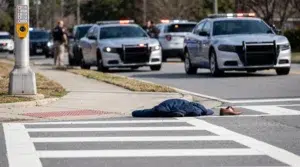
Depending on the facts of your case, determining what damages should the settlement cover involves looking at both your financial and personal losses. Under South Carolina personal injury principles, an injured pedestrian may recover SC economic damages, such as medical expenses and lost income, as well as non-economic damages, such as pain and suffering.
Pedestrians have no vehicle around them, so injuries can be more severe in some cases. That makes categories like long-term care, permanent disability, and scarring especially relevant. If you are asking what damages a pedestrian accident settlement should cover, the honest answer is that what applies, and how much may be recoverable, depends on the injuries, the evidence, and fault.
When an accident results in a death, South Carolina’s wrongful death and survival laws may apply instead, with different considerations. A South Carolina pedestrian accident lawyer at Shelly Leeke Law Firm can help identify which categories may be relevant to you.
What Should a South Carolina Pedestrian Accident Settlement Cover?
South Carolina has no special damages rule just for pedestrians. Pedestrian claims generally follow ordinary personal injury principles, which group losses into two types:
- Economic damages: Financial losses you can document, such as medical bills, pay stubs, and receipts.
- Non-economic damages: Real losses that are harder to put a number on, such as pain, limitations, and the emotional effects of the injury.
Not every category applies to every case, and each must be supported by evidence.
Why Pedestrian Injuries Can Involve More Significant Damages
A person on foot has no frame, airbags, or seat belt between them and a vehicle. Pedestrian crashes can involve:
- Fractures.
- Head and spinal injuries.
- Internal injuries.
- Extensive road rash.
Many pedestrians recover well, but when injuries are serious, long-term categories often become a central part of the claim rather than an afterthought. That is one reason pedestrian claims can take time to evaluate fully.
Medical Expenses
This category may include:
- Ambulance transport and emergency care.
- Surgery and hospitalization.
- Imaging.
- Medications.
- Follow-up visits.
It may also include future medical care your doctors expect you to need, such as additional surgeries or ongoing treatment. Future costs generally need to be supported by medical evidence rather than estimates.
Lost Income and Loss of Earning Capacity
Lost income covers the wages you missed while recovering. When injuries are lasting, a claim may also include loss of earning capacity. That is a reduction in your ability to earn in the future, for example, if you cannot return to physical work or must take a lower-paying job. It typically requires both medical and employment evidence.
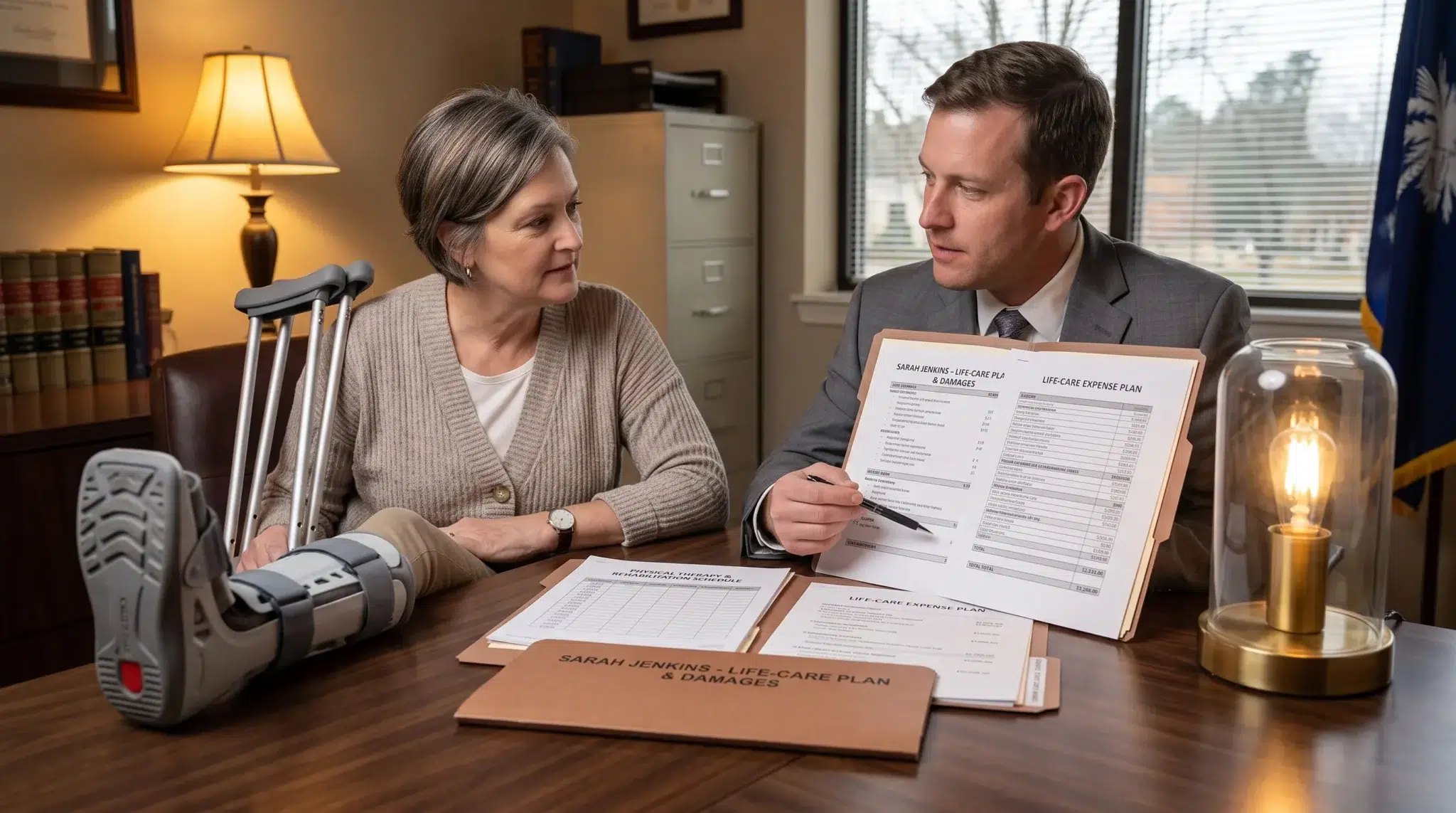
Permanent Disability and Long-Term or Life-Care Costs
Some pedestrian injuries, such as brain injuries, spinal cord injuries, or amputations, can change a person’s life permanently. In those cases, a claim may account for:
- Ongoing care and in-home assistance.
- Home or vehicle modifications.
- Mobility equipment and assistive devices.
- Other long-term needs.
These costs are often supported by treating physicians and, in serious cases, a professional life-care plan that projects future needs.
Scarring, Disfigurement, and Rehabilitation
Road rash, surgical incisions, and facial injuries can leave permanent scars. Visible scarring or disfigurement may be considered as part of non-economic damages. Scar revision or reconstructive surgery costs are part of medical expenses.
Rehabilitation is often separately significant, including physical therapy, occupational therapy, and sometimes cognitive or speech therapy after a head injury.
Pain and Suffering and Emotional Distress
Pain and suffering refers to the physical pain of the injury and its effect on your daily life, including sleep, mobility, work, and activities you enjoy. Emotional distress refers to the psychological effects, which after a pedestrian crash can include anxiety about crossing streets or walking near traffic. These are recognized non-economic damages. There is no set formula for either. They are evaluated from your medical records, your testimony, and the facts.
What If the Accident Resulted in a Death?
We recognize this may be the hardest question on this page, and that you may be reading it while grieving.
When a pedestrian dies because of another person’s wrongful act or negligence, South Carolina’s wrongful death statute (S.C. Code § 15-51-10 et seq.) allows a claim against the responsible party. The claim is brought by the executor or administrator of the estate. It is for the benefit of the surviving spouse and children, or, if there are none, the parents, or, if there are none, the heirs (§ 15-51-20).
South Carolina law also recognizes a separate survival action, which addresses losses the person experienced before death. Settlements of wrongful death and survival claims must be approved by a court (§ 15-51-41). The damages considered in these claims differ from an ordinary injury claim. Our South Carolina wrongful death page has more information, and we are here to speak with your family privately whenever you are ready.
What Could Affect or Reduce What I Can Recover?
South Carolina follows a modified comparative negligence rule (Nelson v. Concrete Supply Co., 1991). Under this standard:
- 50% or less at fault: You can still recover compensation, but your total payout is reduced by your exact percentage of fault.
- More than 50% at fault: You are completely barred from receiving any compensation.
In pedestrian accident cases, fault often involves questions about crosswalk use, traffic signals, right-of-way, and visibility. Notably, being outside a crosswalk does not automatically make you mostly at fault. Our FAQ on what to do after being hit while crossing the street covers South Carolina’s pedestrian right-of-way rules in detail.
What Determines the Value of a Pedestrian Accident Settlement?
When deciding what damages should the settlement cover and how much a claim is worth, there is no set formula or “average.” Value generally depends on:
- How severe and permanent the injuries are.
- The quality of your medical records.
- Fault.
- The insurance coverage available, including your own uninsured or underinsured motorist coverage in some cases.
For help judging a specific offer, see our FAQ on how to tell if a settlement offer is fair.
How Can a South Carolina Pedestrian Accident Attorney Help?
A South Carolina pedestrian accident lawyer can:
- Evaluate your injuries and the evidence.
- Identify every category that may apply.
- Document long-term care needs and scarring.
- Respond to fault arguments.
- Pursue all available insurance.
Shelly Leeke Law Firm works on a contingency basis, meaning no fee unless the firm recovers for you. No lawyer can guarantee a result or an amount.
Get Help with Your Pedestrian Accident Claim at Shelly Leeke Law Firm
If you are wondering what damages should the settlement cover after a pedestrian crash in South Carolina, let our legal team review the details of your case.
Whether you are seeking medical expenses, lost wages, or wrongful death damages for a loved one, we are ready to help.
Call us at (843) 604-3273 to request a free consultation with Shelly Leeke Law Firm today.