
Wondering what to do about the “insurance adjuster is calling me” situation? You may need to communicate with an insurance adjuster after a South Carolina accident. But before you give a detailed statement, first find out which insurance company the adjuster works for and what they are asking for. Be especially careful before you:
- Discuss fault.
- Describe the full extent of your injuries.
- Sign any documents.
- Agree to a recorded statement.
- Authorize the release of your medical records.
If the other driver’s insurer wants a recorded statement or a detailed discussion of your injuries, consider talking with a South Carolina personal injury attorney at Shelly Leeke Law Firm first. Our lawyers have decades of experience dealing with all types of personal injury cases.
Insurance Adjuster Is Calling Me. Should I Talk to Them After a South Carolina Accident?
If there is an insurance adjuster calling me about my South Carolina accident, should I speak with the insurance adjuster? Usually, some communication is reasonable and sometimes necessary. An adjuster works for an insurance company that is evaluating a claim under its policy. That evaluation can include:
- Liability (who caused the crash).
- Coverage.
- The damage to the vehicles.
- Whether and how the crash caused any injuries.
Your interests and the insurer’s may not be the same. What matters most is who is calling, what they want, and whether the conversation is about your car or about fault and your injuries.
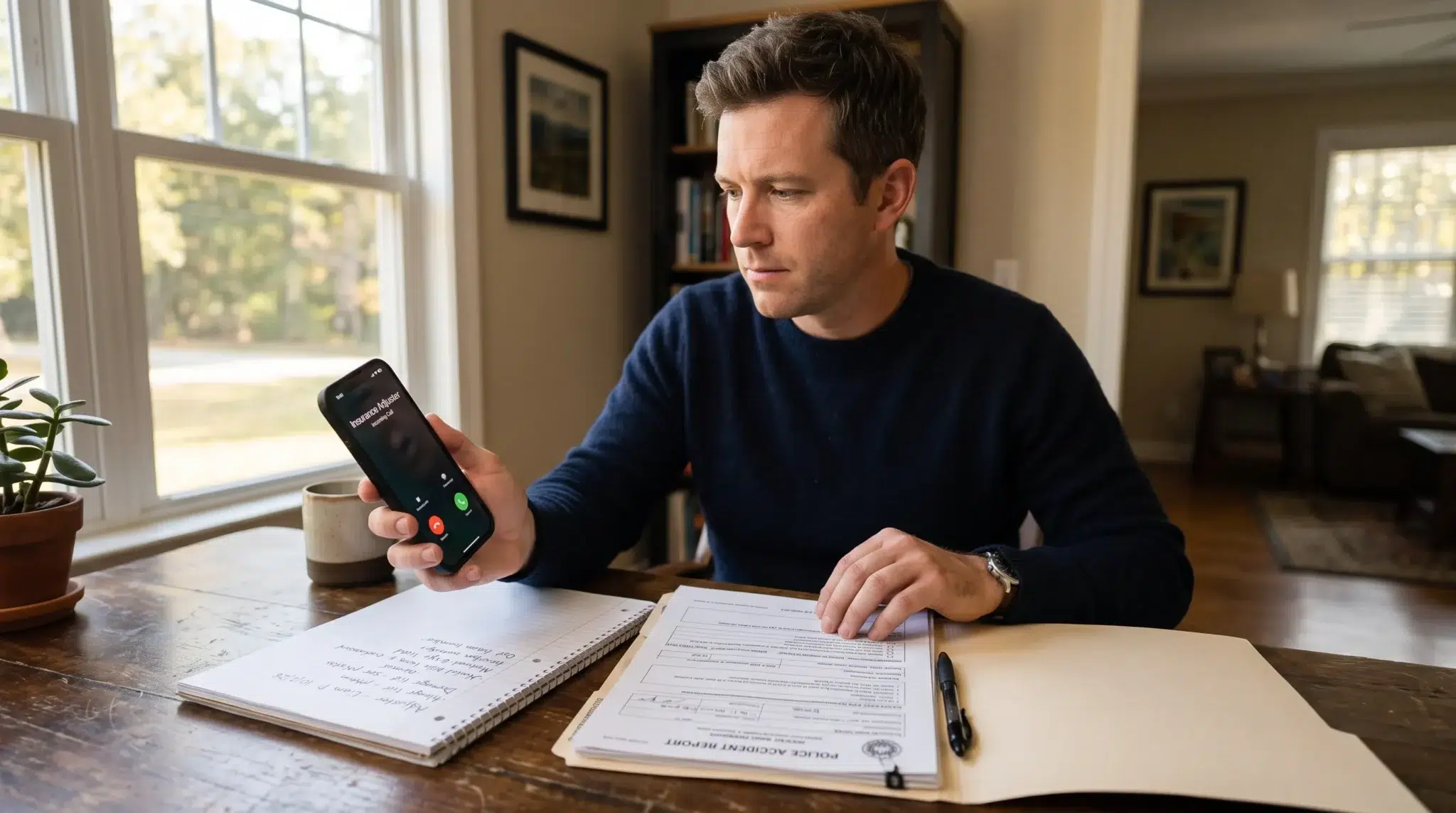
Which Insurance Company Is Calling You?
Knowing who is on the other end of the line determines your legal obligations and how carefully you need to handle the conversation.
The Other Driver’s Insurance Company
If the other driver’s liability insurer is calling, you are generally a SC third-party claimant. You are not that insurer’s customer, and you generally do not owe it the contractual duties you owe your own insurer. You are not prohibited from talking to it.
Its adjuster, however, is evaluating a claim against its own policyholder. Be careful with recorded statements, statements about fault or prior injuries, broad medical releases, and anything involving a release or settlement.
Your Own Insurance Company
Your own insurer is different. Your policy likely requires you to report the accident promptly and cooperate with the insurer’s investigation. Examples include claims under your collision coverage, medical payments coverage, or uninsured motorist coverage. Do not ignore your own insurer. Read your policy and give accurate information. If you have questions about what you are required to provide, a lawyer can help.
Should I Give the Adjuster a Recorded Statement?
A recorded statement is an interview, often by phone, that the adjuster records with your permission. Adjusters use recorded statements to gather facts, and the exact wording of your answers creates a lasting record. That record may be used as evidence and can affect how the claim is evaluated.
Before giving a recorded statement to the other driver’s insurer, it is reasonable to:
- Ask whether the statement is required.
- Ask what topics it will cover.
- Consider getting legal advice first.
Your own policy may treat statements differently, so check your policy’s terms.
What If the Adjuster Asks About My Injuries?
Injury questions deserve care. Early on, you may not yet know your diagnosis, how long treatment will last, or whether you will need future care. Adjusters may ask about:
- Symptoms and treatment.
- Prior injuries.
- Your prognosis.
- Missed work.
Answer truthfully, but do not guess. Saying “I’m still being evaluated” is better than saying “I’m fine” when you are not, or than speculating about a diagnosis. Do not minimize or exaggerate your symptoms. Get a medical evaluation, since your medical records, not a phone call, are what document an injury.
Can I Talk to the Adjuster About Vehicle Damage?
Property damage conversations are often more routine. They may cover:
- Inspections and photos.
- Repair estimates.
- Towing and storage.
- A rental car.
- Whether the car is a total loss.
South Carolina law helps separate these issues:
- Paying a property damage claim is not an admission of liability for other claims from the same accident (S.C. Code § 38-77-230).
- An insurer may not deny or delay payment of a property damage claim because a bodily injury claim is pending, and undisputed amounts must be paid promptly (§ 38-77-330).
Even so, a property damage call can drift into questions about fault or injuries. Our FAQ on talking with the adjuster about property damage covers this in more detail.
Should I Sign a Medical Authorization?
Not before you understand it. Some forms are narrow. Others allow access to all records from any provider with no time limit. Before signing, check:
- Which providers the form covers.
- What time period it covers.
- Whether it is limited to treatment related to the accident.
- How the records will be used.
Insurers can have legitimate reasons to review records, so this is about scope, not a flat refusal. See our FAQ on receiving a medical authorization form from the insurance company.
What Questions Might an Insurance Adjuster Ask?
An adjuster may ask about:
- The date, time, and place of the crash, and who was driving.
- How the crash happened.
- Vehicle damage.
- Injuries and where you were treated.
- Missed work.
- Prior accidents or injuries.
- Insurance coverage.
- Witnesses and the police report.
For more, read what questions insurance companies ask after an accident.
What Should I Do If an Adjuster Calls Me SC?
If an insurance adjuster reaches out to you after an accident, here are the steps you should follow:
- Write down the adjuster’s name, company, phone number, and claim number.
- Ask which claim and which insured the call is about.
- Ask whether they want a recorded statement.
- Answer truthfully, and do not guess or speculate about fault.
- Do not discuss settlement until you understand your injuries and the claim.
- Ask for important requests in writing.
- Get legal advice before a detailed recorded statement to the other driver’s insurer.
What If the Adjuster Offers a Settlement?
An early offer is not necessarily unfair, but it may come before your future medical needs are known. Settling usually means signing a release, which generally ends the claims it covers. Read what is being released and against whom. Consider legal advice before you sign.
South Carolina law, S.C. Code § 38-59-20, lists improper claim practices by insurers. They include knowingly misrepresenting pertinent facts or policy provisions, and not attempting in good faith to settle claims promptly and fairly once liability has become reasonably clear. The statute applies when such acts are committed without just cause and often enough to indicate a general business practice, and the Department of Insurance enforces it. An unfavorable offer or ordinary questioning does not by itself violate that law.
When Should I Speak With a South Carolina Personal Injury Lawyer?
Legal advice can be especially useful in situations such as:
- You have significant injuries.
- The other driver denies liability.
- Several vehicles were involved.
- Someone is asking for a recorded statement or a broad medical authorization.
- You have received a settlement offer.
- Uninsured or underinsured motorist coverage is involved.
A lawyer is not required, but can handle these communications for you. The South Carolina Department of Insurance also offers consumer information on auto insurance.
Schedule a Free Consultation with Shelly Leeke Law Firm
If an insurance adjuster is calling me continuously while I am trying to recover from injuries, it can quickly become overwhelming. Before you agree to a recorded statement, sign a broad medical release, or accept a premature settlement offer, let our personal injury lawyers or South Carolina car accident attorneys review your case and protect your rights.
Call (843) 604-3273 now or fill out our online form to request a free consultation with Shelly Leeke Law Firm.