
For Grieving North Charleston Families
- Only a court-appointed personal representative can file a South Carolina wrongful death case, so families who have not opened an estate usually begin in probate court.
- Most grieving families hold two separate claims: a wrongful death claim for the statutory beneficiaries and a survival action under § 15-5-90 that belongs to the estate.
- Any settlement of either claim needs a judge’s sign-off from a probate, circuit, or federal court under §§ 15-51-41 and 15-51-42.
- An acquittal, a dropped charge, or no arrest at all in a felony DUI or reckless vehicular homicide case does not end the family’s civil case.
- Families generally have three years from the date of death to sue, but a claim against a government agency usually has a two-year limit.
Losing a parent, spouse, or child because someone else was careless leaves a family with grief, unpaid bills, and legal questions nobody prepared them for. A wrongful death lawyer in North Charleston at Shelly Leeke Law Firm can take the legal work off your shoulders, from opening the estate to pursuing every responsible party, so you can focus on each other.
We have represented injured people and grieving families in South Carolina since 2007, from our headquarters at 6060 Rivers Ave in North Charleston. Most families have two claims, not one, and many are only ever told about the first. To talk through what happened and which claims your family holds, schedule a free consultation with our team.


A Trusted North Charleston Wrongful Death Lawyer Can Help
Evidence after a fatal crash disappears quickly on busy corridors like Rivers Avenue, Remount Road, and Palmetto Commerce Parkway. Traffic camera and business video is often recorded over within days, and a commercial truck’s event data recorder can be overwritten if no one asks for it. We send preservation (spoliation) letters early so the trucking company, the business, or the property owner is on notice to keep what it has.
At the same time, we handle the paperwork families dread. Under § 15-51-20, a wrongful death action must be brought by the executor or administrator of the person who died. If no estate has been opened, we help a family member get appointed as personal representative through Charleston County Probate Court or the probate court in the county where your loved one lived.

How a North Charleston Wrongful Death Attorney Strengthens Your Case
A wrongful death case is two jobs at once: proving that someone else’s conduct caused the death, and showing what that loss means to the family in concrete terms. We approach both with patience for what families are going through and the preparation of a case that may go to trial.
How We Build a Strong Wrongful Death Claim
Section 15-51-10 allows a lawsuit whenever a death is caused by another person’s wrongful act, neglect, or default, as long as the person could have sued had they survived. To prove that, we obtain police and crash reports, interview witnesses, and retain accident reconstruction experts when fault is disputed. Where a vehicle, a property condition, or a product failed, we bring in the engineers who can explain why.
The Financial Impact of a Fatal Accident
When a family loses a wage earner or a caregiver, the loss reaches far past the next paycheck. Health insurance, retirement contributions, household services, and childcare can all disappear at once. We work with economists and vocational experts to put a reliable number on those future losses, because an insurer’s first estimate rarely accounts for the years of support the family should have had.

Common Incidents and Accidents Resulting in Wrongful Death
Fatal cases in the North Charleston area come from many places, and each type of case has its own rules and evidence. The ones we see most often include:
- Fatal crashes on I-26, I-526, and Rivers Avenue, which overlap with our North Charleston car accident lawyer work
- Collisions with tractor-trailers moving freight from the port and distribution centers, handled with our truck accident team
- Deaths of riders, cyclists, and people on foot, including motorcycle crashes and pedestrian accidents
- Medical errors that lead to a death, which raise medical malpractice rules of their own
- Neglect in long-term care, covered on our nursing home abuse page
- Unsafe property conditions such as poor security or falls, which fall under premises liability
- Defective vehicles, parts, and consumer goods that support a product liability claim
- Workplace deaths, where workers’ compensation death benefits may apply and a separate claim against a third party may exist
Civil Wrongful Death vs Criminal Homicide Claim
A criminal case and a civil wrongful death case can arise from the same death, but they answer different questions. The state prosecutes to punish the offender; in Charleston and Berkeley counties, that is the job of the Ninth Circuit Solicitor’s Office. Common charges after a fatal crash include felony DUI resulting in death (§ 56-5-2945) and reckless vehicular homicide (§ 56-5-2910).
The family’s civil case is separate and seeks compensation rather than punishment. A prosecutor must prove guilt beyond a reasonable doubt, while a civil claim is decided by the preponderance of the evidence, meaning it is more likely than not. That is why a civil case can succeed even when the driver is acquitted, a charge is dropped, or no charge is ever filed. A criminal conviction, when there is one, can still be useful evidence in the civil case.
Potential Damages You Can Seek in a North Charleston Wrongful Death Claim
South Carolina law splits a family’s recovery between two claims that are usually filed together. The wrongful death claim compensates the statutory beneficiaries for their own losses, while the survival action recovers what the person who died could have claimed had they lived. Knowing which losses belong to which claim matters, because the money goes to different people.
Economic Damages (Quantifiable Financial Losses)
Economic damages are the losses that can be measured in dollars and documented with bills, pay records, and expert testimony. Across the two claims, they commonly include medical treatment between the injury and the death, funeral and burial expenses, the income and benefits your loved one would have provided to the family, and the value of services such as childcare and household work that the family now has to replace or go without.
Non-Economic Damages (Quality-of-Life Losses)
Non-economic damages compensate the family for losses that have no receipt but are often the heaviest part of the case. A jury can consider the beneficiaries’ grief and sorrow, mental shock and suffering, and the loss of their loved one’s companionship, care, and guidance. Under § 15-51-40, a jury may also award exemplary (punitive) damages where the death was caused by recklessness, willfulness, or malice, such as a drunk or racing driver.
Survival Actions and the Estate’s Claim
The survival action, preserved by § 15-5-90, belongs to the estate rather than to the family members directly. It covers the conscious pain and suffering your loved one experienced before death and the medical bills from that period. Because survival recovery passes through the estate, it is handled differently from wrongful death proceeds, which go to the statutory beneficiaries. Many families are never told about the survival action, and it can add significant value when there was time between the injury and the death.
Who Receives the Recovery and How Settlements Are Approved
The person who files the case is not necessarily the person who receives the money. Section 15-51-20 directs wrongful death proceeds first to the surviving spouse and children; if there are none, to the parents; and if there are none, to the heirs. Under § 15-51-40, the recovery is divided among them as if the person had died without a will. The same section lets the probate court deny or limit a parent’s share if that parent failed to reasonably support the decedent during childhood.
Settlement is also supervised by a court. Section 15-51-41 requires any settlement of a wrongful death or survival action to be approved by a probate court, a circuit court, or a federal district court, and § 15-51-42 sets out how that works:
- Only a duly appointed personal representative may settle the claims.
- If no lawsuit is pending, the representative files a verified petition in probate or circuit court, and the court holds a hearing on the settlement.
- If a lawsuit is already pending, the petition goes to the court handling the case, which approves a settlement it finds fair and reasonable.
- If the case is filed outside probate court, the probate court must be notified within ten days of filing.
When More Than One Party Is Responsible
Fatal crashes often involve more than one wrongdoer: a driver, the driver’s employer, a company that maintained a truck badly, or a bar that kept serving someone who was already drunk. South Carolina law prohibits a licensed seller from knowingly selling beer or wine to an intoxicated person (§ 61-4-580), and an establishment that over-served the driver may share legal responsibility as a dram shop defendant. Identifying every party also means identifying every insurance policy that can pay.
That search matters more for claims arising in 2026 and later. Under S.C. Code § 15-38-15, a defendant whose fault is less than 50% of the total generally pays only its own share rather than the whole judgment, and Act No. 42 of 2025 now lets a jury assign part of the fault to responsible parties who were never sued, for claims arising after January 1, 2026. If the defendant with the most fault has little coverage, the family’s recovery can depend on finding the other responsible parties early.
Insurance Companies Will Not Always Be Fair, But We Will Fight For You
Insurers often reach out to grieving families within days, sometimes with a settlement offer and a release to sign. Those early offers are usually made before anyone has calculated lost support over a lifetime, the survival claim, or the other policies that may apply. Accepting one can close the claim for good, and any settlement still needs court approval before it is final.
We take over communication with the insurers, document the full value of both claims, and respond to delay tactics with deadlines of our own. When an insurer will not make a fair offer, we are prepared to file suit in the Court of Common Pleas in the county where the case belongs and take the case to a jury.
Filing a Wrongful Death Claim in North Charleston
Filing a wrongful death claim means meeting the same legal burden as any negligence case, with the added steps of the estate and court approval. The evidence has to show both what went wrong and who is responsible for it.
Proving Negligence in South Carolina
To recover, the personal representative must prove four elements:
- Duty: the defendant owed your loved one a duty of reasonable care, such as a driver’s duty to obey traffic laws.
- Breach: the defendant failed to meet that duty.
- Causation: that failure caused the death.
- Damages: the family and the estate suffered losses as a result.
South Carolina uses modified comparative negligence. If the person who died shares some of the blame, the family can still recover as long as that share is 50% or less, and the award is reduced by that percentage.
Evidence That Strengthens Your Case
The strongest wrongful death cases are built on records gathered before they are lost or overwritten. Depending on the facts, we collect:
- Medical and autopsy records, including treatment at MUSC Health or Roper St. Francis
- Crash reports from the North Charleston Police Department or SCHP Troop 6
- Traffic camera, dashcam, and business surveillance video
- Truck event data, driver logs, and maintenance records
- Testimony from economists on lost income and support
Challenges Families Face When Proving Wrongful Death
The most common setbacks we see are avoidable: accepting an early offer before the losses are known, overlooking a second responsible party, and misunderstanding which deadline applies. Another is assuming a signed agreement with an insurer is final before settlement approval by the court. Several rules can also change your timeline, and families are often told only that “exceptions exist.”
Deadline warning: a South Carolina wrongful death lawsuit generally must be filed within three years of the date of death under § 15-3-530(6). When a city, county, or state agency such as SCDOT is responsible, the Tort Claims Act usually requires suit within two years, extended to three only if a verified claim was filed first (§ 15-78-110). Those government claims also carry damages limits of $300,000 per person and $600,000 per occurrence (§ 15-78-120).
Why Choose Shelly Leeke Law Firm for Your North Charleston Case
Families come to us at the hardest point in their lives, and they need a firm that handles the details carefully. We preserve evidence early, work with reconstruction experts and economists, open the estate when needed, and prepare each case for court in the county where it belongs. We work on a contingency fee basis, so you pay no attorney’s fees or case expenses unless we recover compensation for you. Our fee is calculated on the gross recovery before expenses are deducted.
Shelly M. Leeke: Guiding Families Through the Estate and the Courtroom
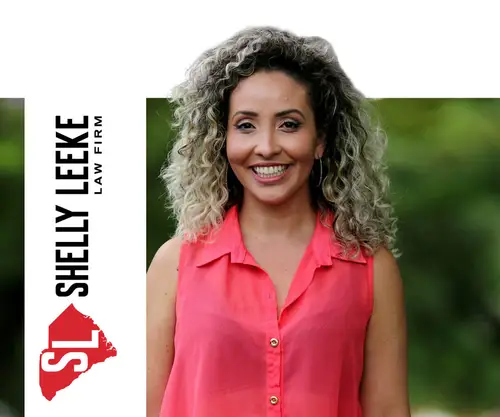
Shelly M. Leeke is the firm’s managing partner. Before representing families, she defended insurance companies in auto and workers’ compensation cases at Blue Williams, which gave her a clear view of how carriers value a fatal claim and when they push for a quick release. She then moved to plaintiff work at Morris Bart and has represented people in South Carolina since 2007.
Her training suits a practice area where procedure matters as much as the facts. She earned her J.D. cum laude from Tulane University Law School in 2002, after a B.S. in Psychology and a B.A. in Government from Wofford College in 1999, and clerked at the Louisiana Supreme Court. Licensed in South Carolina and Louisiana, she wrote The South Carolina Accident Book, was named a 2017 Forty Under 40 honoree and a Super Lawyers Rising Star, and belongs to the American Association for Justice and the Charleston County and Berkeley County bars.
Areas We Serve
North Charleston sits across three counties, and a wrongful death case belongs in the county where the law places it. Charleston and Berkeley counties are part of the Ninth Judicial Circuit, while Dorchester County is in the First Judicial Circuit. From Rivers Avenue, we represent families in North Charleston, Charleston, Goose Creek, Moncks Corner, Summerville, Hanahan, Ladson, and the rest of Charleston, Berkeley, and Dorchester counties. For injuries that did not result in a death, see our North Charleston personal injury lawyer page.
When Your Family Is Ready to Ask Questions
You do not need to have an estate opened, a police report in hand, or every answer before you reach out. Call our North Charleston office at (843) 604-3273, and we will explain which claims your family holds, which deadline applies, and what the first steps look like.
Wrongful Death FAQs for North Charleston Families
Nobody has opened an estate yet. Can we still act?
Yes. The first step is having a personal representative appointed through probate court, and we handle that for families. The three-year deadline generally runs from the date of death either way, so it is wise to start early.
Which family members share in a wrongful death recovery?
The surviving spouse and children come first. If there are none, the parents receive it, and if there are no parents, the heirs. The money is divided as though your loved one died without a will.
The driver was acquitted or never charged. Is our civil case over?
No. The civil claim is decided by the preponderance of the evidence, a lower standard than beyond a reasonable doubt. It runs independently of the criminal case, so a family can recover even when no conviction ever happens.
Why does a court have to approve our settlement?
South Carolina requires court approval for every wrongful death and survival settlement to protect the beneficiaries. A probate, circuit, or federal judge reviews the terms at a hearing and approves a settlement that is fair and reasonable.
Is a wrongful death settlement taxable?
Under federal tax law, compensatory damages received on account of physical injury or death are generally not taxable income, while punitive damages generally are. Because every situation differs, families should confirm the treatment of their settlement with a tax professional.